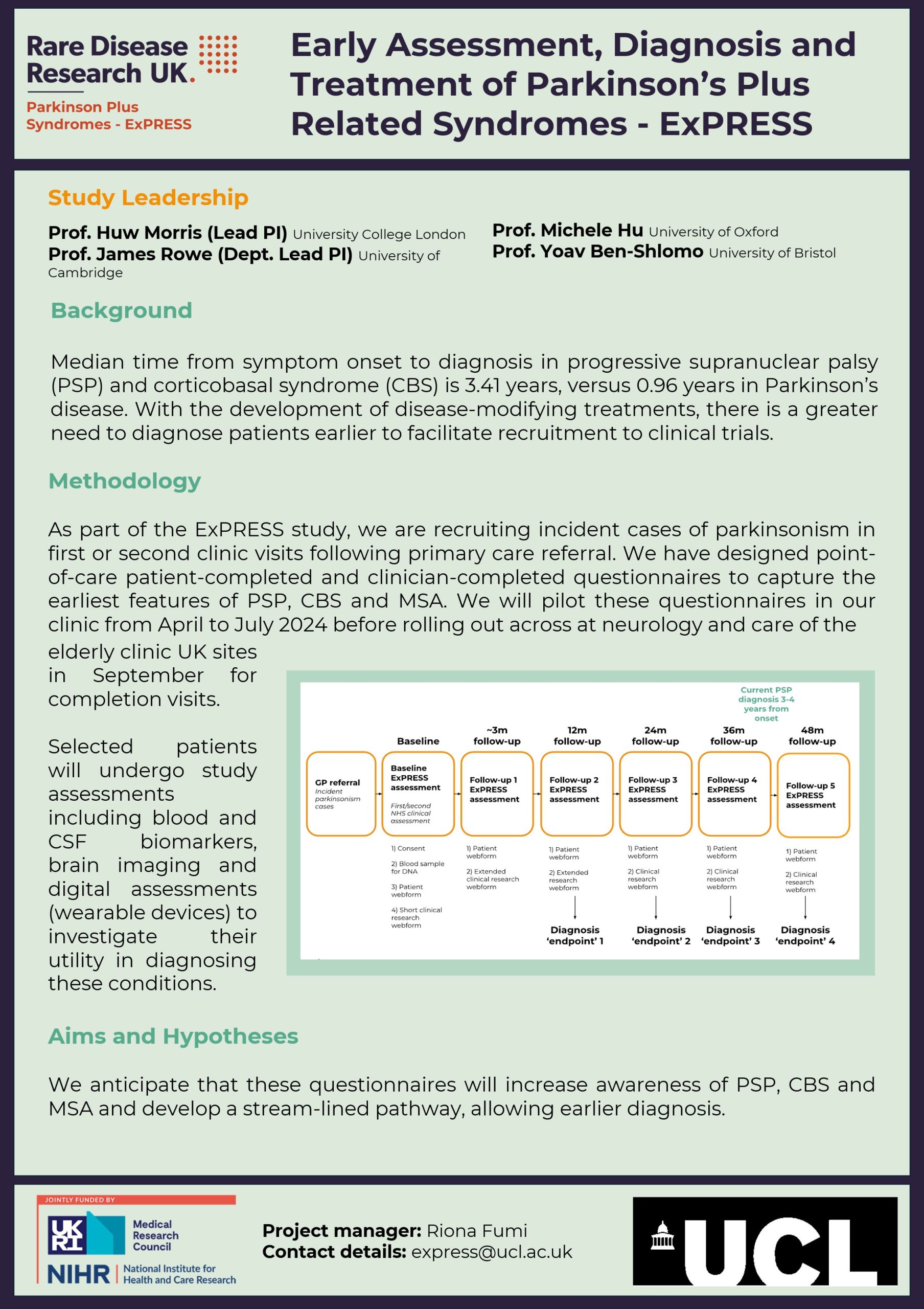
The “Early Assessment, Diagnosis and Treatment of Parkinsonism and Related Syndromes” (ExPRESS) study node is a new UK study of Parkinsonism & related syndromes, which include the following conditions: 1) Parkinson’s disease (PD); 2) progressive supranuclear palsy (PSP); 3) corticobasal syndrome (CBS) and 4) multiple system atrophy (MSA). The study will be led at University College London by Professor Huw Morris, alongside Professor Yoav Ben-Shlomo at the University of Bristol, Professor Michele Hu at the University of Oxford and Professor James Rowe at the University of Cambridge.
ExPRESS will build on from the success of the earlier PROSPECT study, which has improved our understanding of PSP, CBS and MSA and helped to identify key challenges in diagnosis and treatment. We aim to improve the early diagnosis of PD, PSP and CBS, the accuracy of both diagnosis and prognosis, and to increase the identification of rare Parkinsonian conditions.
With the help of the ExPRESS network, at least 500 patients with Parkinsonism will be recruited to the study between 2023 and 2028. Participants and their consultants will be asked to complete a short online questionnaire each about the nature of the patient’s symptoms. The questionnaires will be repeated at regular intervals up to 36 months after their first specialist hospital appointment. Participants will also be asked to donate a blood sample for DNA. Participants with a diagnosis of a rare Parkinsonism or related syndromes will have the option to take part in a face-to-face neurological assessment and have blood, cerebrospinal fluid (CSF) and skin biopsy samples collected. We will build a biobank of samples and data which will be used for improving diagnosis, and increasing our understanding of disease biology.
Objectives
The aims of the ExPRESS node are:
To form a network, bringing together patients, relatives, researchers and UK charities including the PSP Association and the MSA Trust;
To improve the early diagnosis of the Parkinsonism & related syndromes;
To create a biobank of samples in participants who have parkinsonism, which could be important for future research.