Reflections on an advisory group for smartphone research with young adults with a rare genetic disease
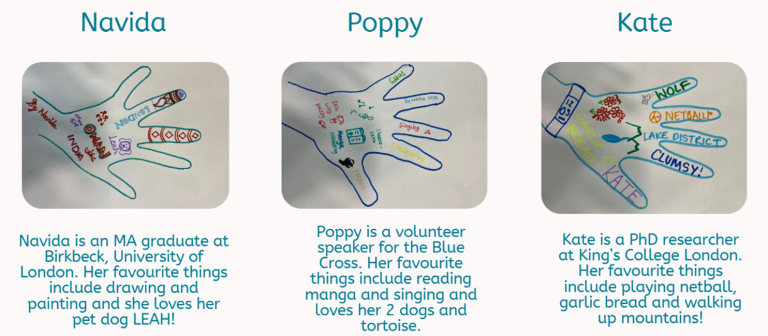
Kate Fifield & Navida Ameen
What is TSC?
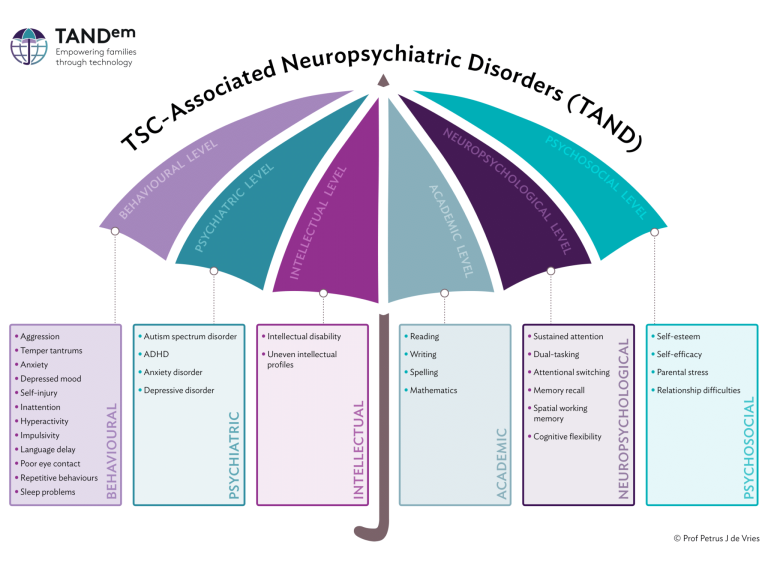
TSC is a rare genetic condition that causes non-malignant tumours to grow in the skin, brain and other organs. Approximately 11,000 people in the UK have TSC. As well as physical health difficulties, individuals with TSC can have difficulties with their learning, development and emotional and social well-being. These difficulties are called “TSC-Associated Neuropsychiatric Disorders” or “TAND”.
Adapted from https://tandconsortium.org/about/ by
Prof Petrus J de Vries. Used with permission.
Who we are
Where our journey began
Kate: The Tuberous Sclerosis 2000 Study is the first longitudinal study of TSC globally. It aims to understand why TAND occurs in TSC. After following a group of children since 2001, all the participants have become young adults. We know that young adulthood can be a tricky time and young adults with TSC can experience difficulties with emotional well-being whilst managing new responsibilities and expectations.
We want to explore how a new type of smartphone app called Ecological Momentary Assessment (EMA) can help monitor and record young adults with TSC social well-being and quality of life.
As this is a new type of assessment, I wanted to ask young adults with TSC to help design the study. I was grateful to receive funding from the King’s College London Public Engagement Grant to run an advisory group.
Navida: I became involved in the advisory group through my experience as a patient in the medical community. I came across a paper that mentioned an opportunity to connect with other patients with TSC. After discussing it with my parents, they encouraged me to take part, seeing it as a great way to meet others with similar experiences. I also saw it as a chance to engage with a university I was interested in attending. Excited about the opportunity, I filled out the form and joined the advisory group.
Reflections
Kate: As there was no guidance on how to run an advisory group for young adults with TSC, I asked the advisors to complete a pre-group form to help me design the set-up of the advisory group
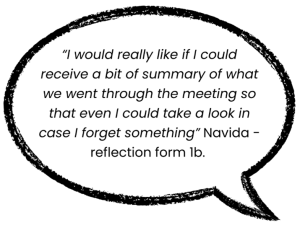
However, I knew I might not get it right the first time and that the advisor’s needs might change. So, I asked them to complete a reflection form after each meeting. We discussed these in the following meetings and made the changes asked. One example is shown here:
Navida: The pre-reflection and reflection forms played a crucial role in helping our advisory group understand each other, especially since we had only met once and were not always together. Even in that first meeting, it was clear how important it was to develop an awareness of each other’s emotions and perspectives.
The group
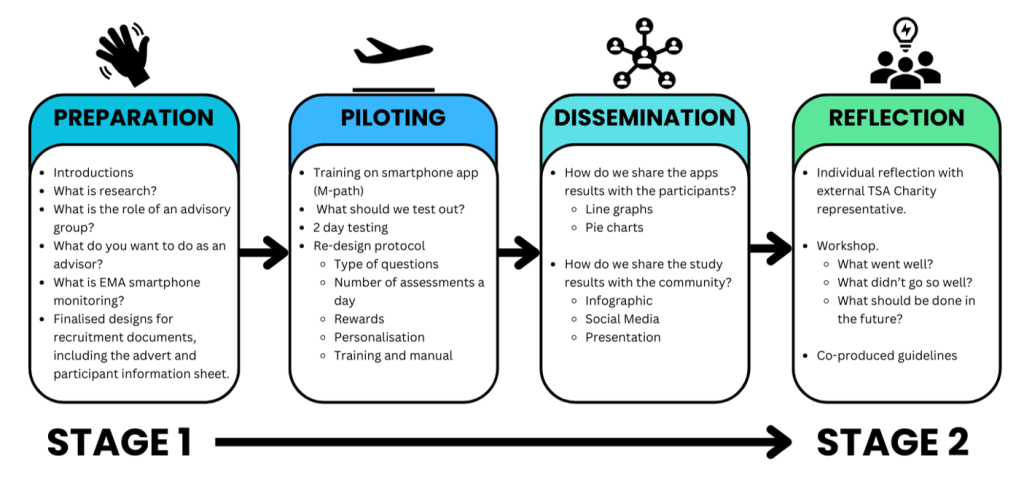
Kate: I organised the group into two stages.
Stage 1: We co-developed the smartphone app which involved a preparation, piloting and ‘dissemination’ or ‘sharing’ block.
Stage 2: I believed it was important that we reflect and evaluate the advisory group. To do this, the advisors first attended a separate meeting with a representative from the Tuberous Sclerosis Association (TSA), allowing them to share their true experiences of the group – the bad bits as well as the good bits!
We then met together in person in London for a workshop! We reviewed all reflection forms, including the TSA reflection report, to start to understand what went well and what should be improved on for future groups. We decided to create a guideline to share our experience of an advisory group and a guideline specific to smartphone EMA research! We hope these guidelines will be useful for researchers in TSC and other rare diseases as well as for young adults with rare diseases taking part in EMA/smartphone research.
Visit our website where you can download the guidelines: https://www.ts2000study.co.uk/news
Navida: The workshop and guidelines provided us with valuable insights into how we should approach reflection and support others, particularly those with TSC. We learned the importance of expressing our emotions and feelings effectively and how to communicate them more clearly. These guidelines will continue to be a useful tool in navigating these conversations and fostering meaningful connections.
Next steps for the advisory group
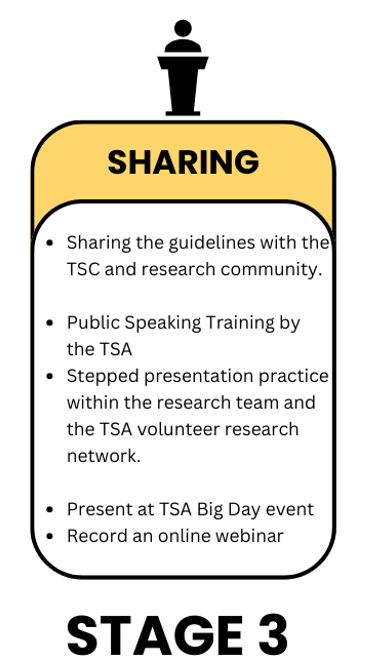
Kate: We have been lucky to receive further funding for stage 3 to help share these guidelines within the TSC community and broader audiences! The advisors and I are undertaking a public speaking training programme to help us present the guidelines. The aim is to present at the TSA’s big charity event in June!
Next steps for TSC research
Navida: The next steps for TSC research should be focused on developing more targeted treatments, improving early diagnosis, and understanding the long-term effects of the condition. Expanding genetic research, increasing patient-centred studies, and enhancing global features can also be crucial in finding better therapies and, at last, improving the quality of life for people who are affected.