The Power of Patient Involvement: Driving Research with the ADTKD Community
Dr Holly Mabillard
I am a kidney doctor and researcher based in the north of England, currently completing a PhD focused on understanding and finding treatments for Autosomal Dominant Tubulointerstitial Kidney Disease (ADTKD-UMOD), a rare genetic kidney disease that causes kidney failure in families and is frequently overlooked. I deliver a large specialist kidney genetics clinic alongside Professor John Sayer and serve as the national co-lead for the UK Rare Kidney Disease Registry (RaDaR) for ADTKD, which tracks patients across the country to improve research and care. Additionally, I lead a project within ADTKD-NET, an international research network, investigating factors that influence disease progression in ADTKD. My research aims to uncover new insights into ADTKD that could lead to better treatments and outcomes for patients.
Understanding ADTKD: A Rare Yet Impactful Disease
Autosomal Dominant Tubulointerstitial Kidney Disease (ADTKD-UMOD) is a rare genetic condition that silently disrupts lives. Despite its rarity, it accounts for at least 2% of kidney failure cases and 1% of chronic kidney disease which affects 12% of people globally. Yet, ADTKD remains under-recognised, leaving many families facing significant challenges without available treatments, reliant on dialysis or transplantation and associated complications.
A Collaborative Approach: Patients at the Heart of Research
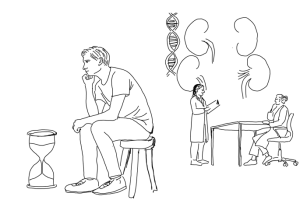
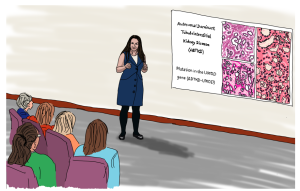
Recognising the importance of patient and public involvement and engagement (PPIE), I worked closely with a dedicated patient advocate to co-design a national ADTKD patient day. Funded by a Tilly-Hale grant, this event became a platform for patients to share their stories through art and creative writing, facilitated by professional illustrators and artists.
The impact felt profound. It not only strengthened the ADTKD patient community but also sparked new research ideas and led to the formation of a dedicated ADTKD PPIE focus group. Additionally, the event inspired new fundraising initiatives to support ongoing research efforts.
Making Complex Science Accessible
One key challenge in rare disease research is making complex genetic information understandable. To bridge this gap, we developed ‘UMOD and you! Explaining a rare disease diagnosis’—a patient-friendly publication designed to break down medical complexities into accessible language. This resource is available here and through the RaDaR Registry and has been instrumental in ensuring families feel informed and empowered.
Equity, Diversity, and Inclusion in PPIE
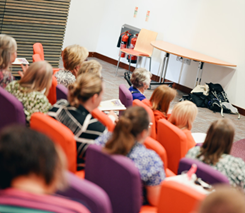
In planning our patient day, we prioritised inclusivity. We welcomed a diverse range of voices, including unaffected family members and carers, to build a holistic understanding of the disease’s impact. To ensure accessibility, we used culturally sensitive visuals and clear, jargon-free language. The event was structured to support neurodiverse individuals, providing calm spaces, interactive elements, and alternative ways to engage, such as speech-to-text transcription by story artists.
A Kidney Research UK grant enabled us to offer travel bursaries, making the event accessible to more families. Looking ahead, we aim to extend this inclusive approach through a planned webinar, broadening our reach globally.
Fostering Two-Way Communication
True engagement requires ongoing dialogue. Before the event, we shared the ‘UMOD and you!’ paper to help patients prepare. During the day, open discussions, creative storytelling, and interactive sessions ensured that every voice was heard. Post-event, we maintained communication through direct follow-ups and the establishment of a patient focus group, creating a sustainable network of support and collaboration.
Expanding Impact Beyond the Event
The success of our PPIE initiatives extends beyond a single day. We used national partnerships, including Kidney Research UK and the RaDaR Registry, to maximise our reach. We shared our learning from patient experiences internationally at the International ADTKD Summit and will furthering this at the upcoming National UK Kidney Week Conference, ensuring global access to educational materials and patient narratives.
Additionally, we invited nephrology professionals at various career stages to engage in the patient day and subsequently launched a regional ADTKD education initiative, offering training sessions informed by patient experiences. The creative outputs from our event, including artwork and poetry, are now being transformed into long-term educational resources and will be displayed in clinical settings to inspire both patients and healthcare professionals.
The Transformative Power of PPIE
Through this experience, I have seen firsthand the impact of patient engagement. Storytelling emerged as a powerful tool for fostering empathy, understanding, and meaningful research collaboration. Working with a patient advocate and creative artists reinforced the importance of diverse, inclusive communication in making science more approachable.
A poem written by a patient day attendee
Dan was born, such a joy
He was perfect in every way,
Such a good young boy,
Until a urine infection was noticed one day.
We had him tested,
Reflux was detected.
Years of managed care
Until he was transplanted.
A UMOD was discovered
The family was all tested.
Angela, Laura, Joe, Dan.
Hoping the disease will be bested.
In the future, I hope to further develop preparatory sessions to empower participants even more and to expand our outreach to include a broader range of patient voices. Our work has not just advanced research, it has built a strong, united community.
Looking Ahead
Our journey doesn’t end here. The upcoming webinar will continue to engage families worldwide, ensuring that the momentum built through our PPIE activities remains strong. The art created during our patient day will be featured in our local renal units and hopefully beyond, serving as a lasting testament to the power of patient involvement in rare disease research.
By working together, we are not just understanding ADTKD, we are ensuring that every patient feels heard, supported, and hopeful for the future.