FOP Friends - Finding a treatment and a cure for FOP
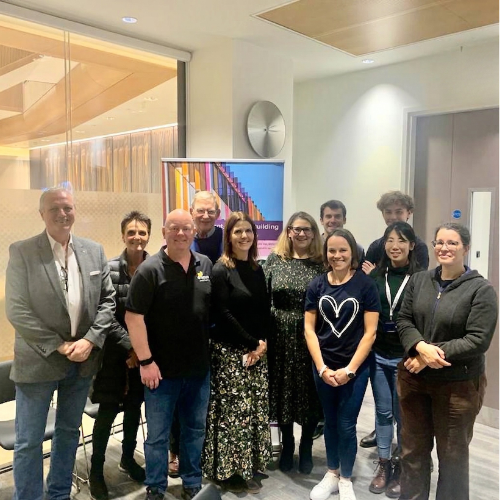
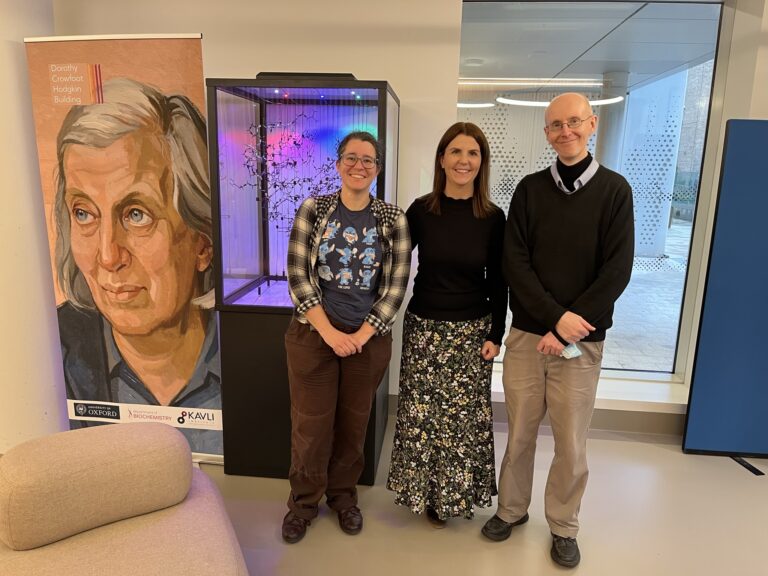
Helen Bedford-Gay and Dr Eleanor Williams
What is FOP
Fibrodysplasia Ossificans Progressiva (or FOP) is an ultra-rare genetic disease affecting around 1 in 1million people in the world – which equates to about 70 patients in the UK. It’s a condition where muscle is converted into bone during ‘flare-up’ episodes, leading to loss of movement and increasing disability as more joints become locked in place.
Cases of FOP have been recorded for centuries but without knowing the cause, and while research into the condition has been going on for decades, it’s only in the last 20 years that major leaps have been made with the discovery of the gene that causes it. A single mutation in the gene for ACVR1, a signalling protein whose usual job is to ensure bone is made in the correct place but that in FOP is overactive. This was the key for unlocking whole new avenues of research – finding the structure of the protein, understanding how it behaves and how we can potentially inhibit it, all of which are essential for ultimately trying to find a cure for the condition.
Who we are
FOP Friends started out as Friends of Oliver, just a few years after the gene was discovered, set up by the family and friends of a young boy called Oliver after his diagnosis. This group quickly widened its outlook as the patient community came together and it grew into something much bigger than a single family. Over the past 15 years, FOP Friends has developed into a wider network who have worked to build a community that supports one another, raises awareness, and crucially drives research into finding a cure, directly funding scientists at the University of Oxford.
But why Oxford? The University of Oxford has been home to research on FOP for decades, with some of the very early original work to discover the gene responsible for the condition being undertaken here. This combined with expertise in the cellular pathway ACVR1 was involved in made it an ideal place to push forward FOP research.
Driving research for a cure
It’s not unusual for patient charities to fund research – many of the larger medical charities do so regularly – but what is unusual is for a charity that represents such a small group to support research that has now directly led to a clinical trial in FOP patients. Research is a painstaking process that can take years to go from laboratory to clinic, and that is a long time for a small charity to support a research group year on year. So how exactly has this long term support been maintained?
A core part of the success in our case is in building a trusting and open relationship between researchers and the patient group – listening to each other and helping each other understand what the other needs. Working with FOP friends it became clear very quickly, and very unsurprisingly, that here was a group of highly motivated people who wanted to understand exactly what was going on and what was causing this devastating condition and, most importantly, what was needed to find a treatment option.
Communication was key. It’s easy to get lost in the research and not realise what the people you’re working for want to know. From the start, the researchers were in contact with patients and their families, talking about their work, reporting on progress made and what the next steps would be.
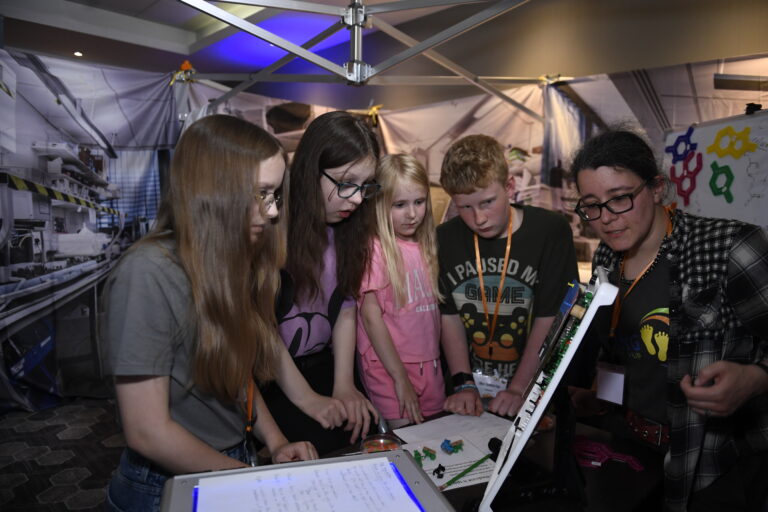
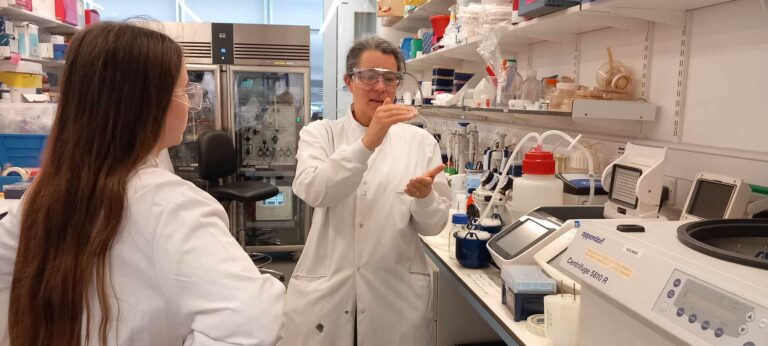
The researchers were guided by the needs of the FOP community to work with them to help them learn more about the research they were funding. This started as working hard on the language used in reports for newsletters, ensuring it was clear and accessible without becoming full of technical jargon, but it swiftly moved to attending and presenting at patient meetings, running workshops to explain the science, running activities at patient meetings, hosting lab visits and helping to co-author material for FOP friends to use at a variety of events.
One member of the community said, “As a parent, having followed the tireless research undertaken to find a safe and effective cure for FOP, I can only praise the incredible collaborative process patients and parents have been involved in. Patient and family involvement has been outstanding and researchers have facilitated understanding with a holistic, patient/family centric communication programme.” (Quote anonymised and presented with permission).
But what is this all for?
Research takes time and after five years it had found a lead that might lead to something. Always tentative, no certainty at this point, just a promising start. Five years. That’s a long time to stick with researchers but the reality is that that is how long it can take. It took another five years to take that lead to a point where it could be tested to see if it could actually be something. Ten years of support, ten years of research, ten years of waiting, ten years of working together.
In 2020, a clinical trial, STOPFOP, was launched as a collaborative effort between AstraZeneca and academics from across Europe to look at the effects of a drug known as ‘Saracatinib’ (take that possibility from 2015) on FOP. Two months later, the pandemic hit and the world became a much smaller place for many of us. For a more common disease, the pandemic would be enough of a complication, but for an ultra-rare disease affecting 1 in 1 million people, the struggle to reach a point where a clinical trial was even possible was immense.
For a trial you need patients, and for that you need people to trust that the trial is worth their time. Trials of new medicines are not guarantees of treatments and can be stressful and time consuming (and let’s not forget the pandemic in the background). With a patient group as small as that found in FOP, recruitment for a trial can be difficult. STOPFOP recruited the patients it needed to, drawn from a group that had followed and supported the research that had led to it and built on the trust and mutual respect that had grown between researchers and the patient group over the previous decade.
The timescales of the trial had to be radically adjusted to accommodate the reality of a post-COVID world. Five years later at the end of 2025, the trial finally came to a formal end, two years later than anticipated, and is currently awaiting the final results to be released. FOP friends and the research group at the University of Oxford have been working closely throughout – 15 years of collaborative work. A phenomenal achievement by any stretch but what is more exciting is the work continues, moving forwards together to find a cure.
Faces behind the post
Ellie explains, “I started working on FOP straight after my PhD, back in 2010 just four years after the gene that caused FOP had been discovered. Going from a project where the direct application of the research was unclear, to this project where the people who could benefit from it became my friends has been fundamentally life changing. It has been a pleasure working with the FOPFriends group, particularly Helen, in pushing the research in the direction that the FOP community needed it to go, and I feel so incredibly lucky to have been able to help get the research to the point of a clinical trial.”
Helen shares, “As a parent with no knowledge or experience of genetics or research, I was thrown into this world when my son was diagnosed with this ultra rare condition. My husband and I founded a charity for our son, and from that day we have been learning as we go. The partnership and friendship we have built with Ellie and the team has been truly invaluable. It’s given me a firsthand understanding of genetics and the complex drug development process – vital for ensuring the quality, accuracy, and accessibility of our patient materials. Working with Ellie created a genuine connection uniting our community, fundraising, research, and discovery. Ellie’s ability to translate complex scientific concepts and research into accessible information for ordinary families is incredible. The team’s presence at our events, combined with our visits to the lab, strengthened this bond and fostered a shared sense of ownership on this clinical trial journey.
Moving forward, we’ll explore dynamic ways to connect, including virtual meets for those unable to travel and short-form educational videos.”